The importance of upgrading to G2 driver cards for seamless fleet management
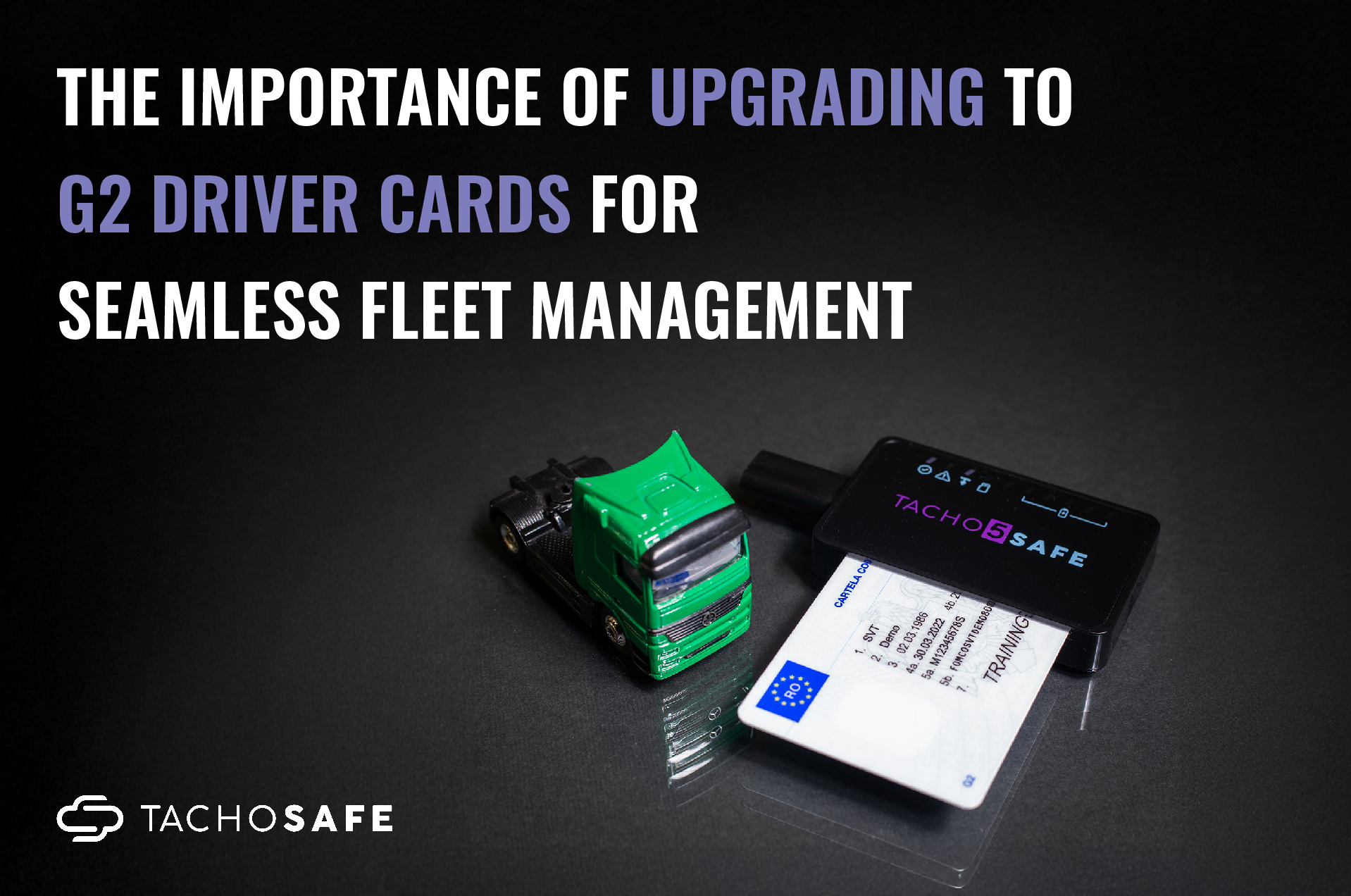
In the world of transportation and logistics, ensuring that your fleet operates efficiently and in full compliance with the law is crucial. A significant part of this is keeping track of data from tachographs, the devices that record the driving time, speed and distance of vehicles.
With the introduction of the new Generation 2 (G2) tachographs, it is essential for transport operators to understand the importance of updating their download equipment and upgrading driver cards to avoid potential legal complications and improve the accuracy of their operations.
Why the shift to G2 tachographs and cards?
Since August 2023, European Union regulations have mandated the use of Generation 2 (G2) tachographs in newly registered commercial vehicles over 3.5 tons. These tachographs offer enhanced features, such as automatic border crossing recording, which streamlines data collection and ensures compliance with driving and rest time regulations. However, while the G2 tachographs are designed to register data like the country of entry or exit at borders automatically, there are challenges when older driver cards (G1) are used with these advanced devices.
If drivers continue to use older G1 cards with Generation 2 tachographs, they may need to manually input border crossing information, leading to potential errors and fines. This issue can create significant operational challenges for fleet operators, especially when managing cross-border logistics. The key to overcoming these issues lies in upgrading to the new G2 driver cards.
Key features of G2 tachographs and cards
The G2 tachograph, combined with the G2 driver card, offers several benefits for fleet managers:
- Automatic border crossing recording – With the G2 system, the tachograph automatically records the location of border crossings. This ensures accurate data logging without the need for manual intervention by the driver, reducing the risk of mistakes and regulatory penalties.
- Extended data storage capacity – G2 cards have an increased data storage capacity compared to their predecessors. While older G1 cards could only store 28 days of data plus the day of inspection, the new G2 cards store up to 56 days of data. This is essential for ensuring compliance with regulations, especially with the recent changes requiring the storage of a full 56 days’ worth of driving and rest time.
- Ensured compliance – By upgrading to G2 cards, companies ensure they are compliant with current updates in regulations, such as the 2024 deadline for retrofitting older vehicles with Generation 2 tachographs. This prevents any disruption in operations and avoids costly fines due to non-compliance.
How to upgrade to G2 driver cards
The process of upgrading to Generation 2 cards is relatively simple, but it requires fleet managers to act promptly. In Romania, for instance, drivers can apply for the G2 card through the Romanian Road Authority (ARR), provided they meet the necessary criteria. The application process includes submitting the necessary documents, proof of driving rights and the older G1 card for exchange, as well as paying the driver card fee.
However, fleet operators should be aware of some restrictions. The G2 card cannot be issued unless the G1 card is no longer valid, damaged, lost, or if there have been personal data changes. While many drivers may want to upgrade preemptively, regulatory restrictions currently prevent them from applying for a new card until their existing one becomes invalid.
What does this mean for fleet managers?
For companies operating both large and small fleets, upgrading to the G2 tachograph system offers several advantages, including greater operational efficiency and reduced risk of non-compliance. By using the latest technology, fleet managers can ensure that all data is automatically recorded, reducing administrative tasks and the potential for costly errors.
Additionally, with advanced tachograph data download devices and a cloud-based data management system like TachoSafe WEB, fleet operators can seamlessly collect, store and analyze tachograph data from any vehicle in their fleet. This technology offers an intelligent solution that ensures compliance with all regulations while providing valuable insights into fleet performance.
Stay ahead of the curve
As the regulations surrounding tachograph data management continue to evolve, it is essential for fleet operators to stay ahead of the curve. The 2024 deadline – that received a grace period of 2 months – for retrofitting older vehicles with Generation 2 tachographs is just one example of how the industry is moving towards more automated, accurate systems for managing driver data. By upgrading to the latest tachographs and driver cards now, as well as opting for advanced data management solutions, fleet managers can ensure smooth operations, avoid penalties and future-proof their businesses.
TachoSafe provides a comprehensive solution for tachograph data management that will help you navigate these changes with ease. With our cloud-based and desktop data storage options, as well as our download devices, TachoSafe is the ideal choice for businesses seeking to streamline fleet management, ensure compliance and optimize their operations.
By acting today, fleet operators can set their businesses up for success, ensuring that they are fully prepared for the future of transport and logistics.